 STEIGNER
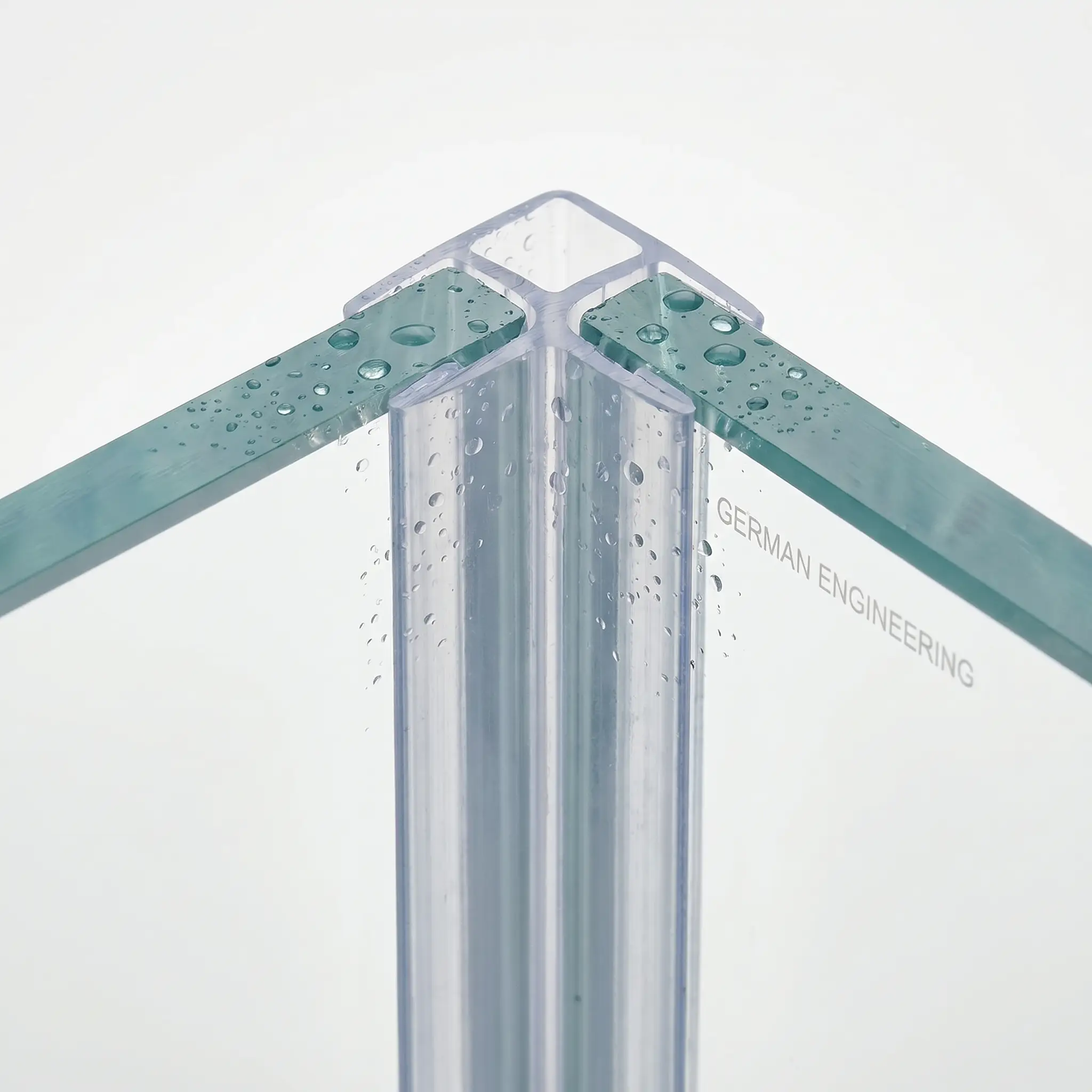
STEIGNER Magnetduschdichtung SET UKM02, 201 cm, 6/7/8 mm Glas, 180° Drehtür
Check current price & rating on Amazon
View on AmazonAffiliate link — we earn from qualifying purchases.
A shower enclosure (or cubicle) has several sealing points: the door, the base, the corners and the walls. When one leaks, you need the matching replacement seal for that spot — by brand, glass thickness and door type.
For corner-entry, alcove, quadrant, pentagonal and walk-in enclosures — branded and universal.
The configurator takes you to the right shower seal in under 90 seconds — by shower type, glass thickness and door type.
STEIGNERAffiliate link — we earn from qualifying purchases.
 DOPPOSO
Affiliate link — we earn from qualifying purchases.
 QOROCO
Affiliate link — we earn from qualifying purchases.
Four spots are typical: the door seal (magnetic on a pivot door, lip on a sliding door), the bottom seal between glass and tray, the corner seal on glass-to-glass joints, and the wall or U-channel at the wall. With the water running, check which edge it escapes from — that shows which seal is due.
Branded enclosures (Kermi, Hüppe, HSK, Schulte, Breuer, Koralle) often need the original profile or a verified universal match with the same glass thickness and push-on shape. Own-brand and DIY-store enclosures usually have a wider choice of universal profiles. With the model name you can find the exact part; without it, measure the glass thickness and the profile shape.
The enclosure shape sets which seals you need. A corner entry has two doors meeting at the corner: two closing edges plus a corner seal on the glass-to-glass joint. A recess (alcove) enclosure sits between two walls and has just one closing edge to seal. A pentagon has its cut corner, so the door closes at a 135° magnet angle.
Quadrant enclosures with their curved sliding doors are the special case: the bottom edge follows a radius, so they need flexible strip profiles that bend with the curve — a rigid straight profile cannot follow it. And a walk-in has no door at all: sealing is reduced to the bottom edge and the wall joint.
Read more: Sealing a walk-in screen
For a branded enclosure the fastest route to the right seal is the model plate or sticker. Look in three places: on the inside of the frame (often near a top corner), along the bottom rail, and on the glass edge near a hinge. The model name plus the maker usually leads straight to the original replacement part.
No plate to be found? Then two measurements replace it: the glass thickness, taken with a caliper, and the cross-section of the old seal. A profile with the same thickness tolerance and the same push-on shape fits regardless of what name is printed on the enclosure.
All the seals on an enclosure are the same age — so when the first one fails, its siblings are usually close behind. If your enclosure is older and one profile has gone hard, replacing the door and bottom seals together often saves a second job a few months later: same shopping trip, one fitting session, and the whole enclosure starts from zero again.
A single seal is the right call when the enclosure is still young and one profile failed early — a kinked lip after cleaning, say, or a magnet strip damaged in a house move. Wear tells you which case you are in: one bad seal among soft ones, or one failed seal among tired ones.
Makers drop enclosure ranges after some years, but a discontinued model is not a dead end. First option: a universal profile with the same glass thickness and the same cross-section as the old seal — for most standard push-on shapes one exists. Second option: a cut-to-size seal strip, trimmed to your edge lengths, which covers unusual dimensions.
Only when neither fits — a proprietary clamp profile with no universal equivalent, say — does the last resort come up: a new enclosure. That is rare, and while the glass and frame are sound it is almost never necessary. Try the two seal routes before pricing a replacement enclosure.
Coming soon
Explainer clip coming soon
An animated step-by-step guide to “Shower Enclosure Seal” — which profile fits and how to replace it — is on the way.
The 5 most common questions, answered.
It depends on the sealing point, door type, glass thickness and make. Door: magnetic or lip seal; base: bottom seal; corners and wall: corner or U-channel profile. Branded enclosures also depend on the model range. The configurator finds the right enclosure seal from the shape, glass thickness and door type.
You can still get there without a model number. Measure the glass thickness with a caliper and look at the shape of the old seal (magnetic, lip, U-channel, bottom). With those two details the configurator finds a matching universal profile; a photo of the old seal helps for comparison.
No — you replace the leaking seal only. But if several profiles are the same age and the enclosure is over five years old, it is often worth renewing the door and bottom seals together, as they wear at a similar rate and one job saves effort.
Check three places: the inside of the frame (often near a top corner), the bottom rail, and the glass edge near a hinge. The sticker or plate carries the maker and model name, which leads to the original replacement seal. If it is missing or worn off, the glass thickness plus the cross-section of the old seal identify a matching universal profile instead.
Usually yes. A universal profile with the same glass thickness and the same cross-section as the old seal fits most standard push-on shapes, and a cut-to-size seal strip covers unusual lengths. Only proprietary clamp profiles with no universal equivalent are a real problem — and only then is a new enclosure worth considering.
Also searched as
Answer three quick questions and get the exact profile for your shower — with live Amazon prices.