 STEIGNER
STEIGNER Magnetduschdichtung SET UKM02, 201 cm, 6/7/8 mm Glas, 180° Drehtür
Check current price & rating on Amazon
View on AmazonAffiliate link — we earn from qualifying purchases.
A frameless glass shower screen only seals as well as its profiles. Screens leak in three places: at the door, along the base where the glass meets the tray, and at the wall. Each spot has its own seal, matched to the glass thickness.
For frameless shower screens, walk-ins, glass panels and bath screens from 4 to 10 mm glass.
The configurator takes you to the right shower seal in under 90 seconds — by shower type, glass thickness and door type.
STEIGNERAffiliate link — we earn from qualifying purchases.
 EMKE
EMKEAffiliate link — we earn from qualifying purchases.
 DOPPOSO
Affiliate link — we earn from qualifying purchases.
Door: a magnetic seal (pivot) or lip seal (sliding) closes the vertical gap. Base: a bottom seal with a wiper lip stops water running out under the glass onto the floor. Wall and side panel: a U-channel or wall profile closes the glass edge to the wall, and on a walk-in a water deflector returns run-off to the tray.
Leaking screen? Watch with the water running to see which edge it escapes from — that tells you which profile to renew.
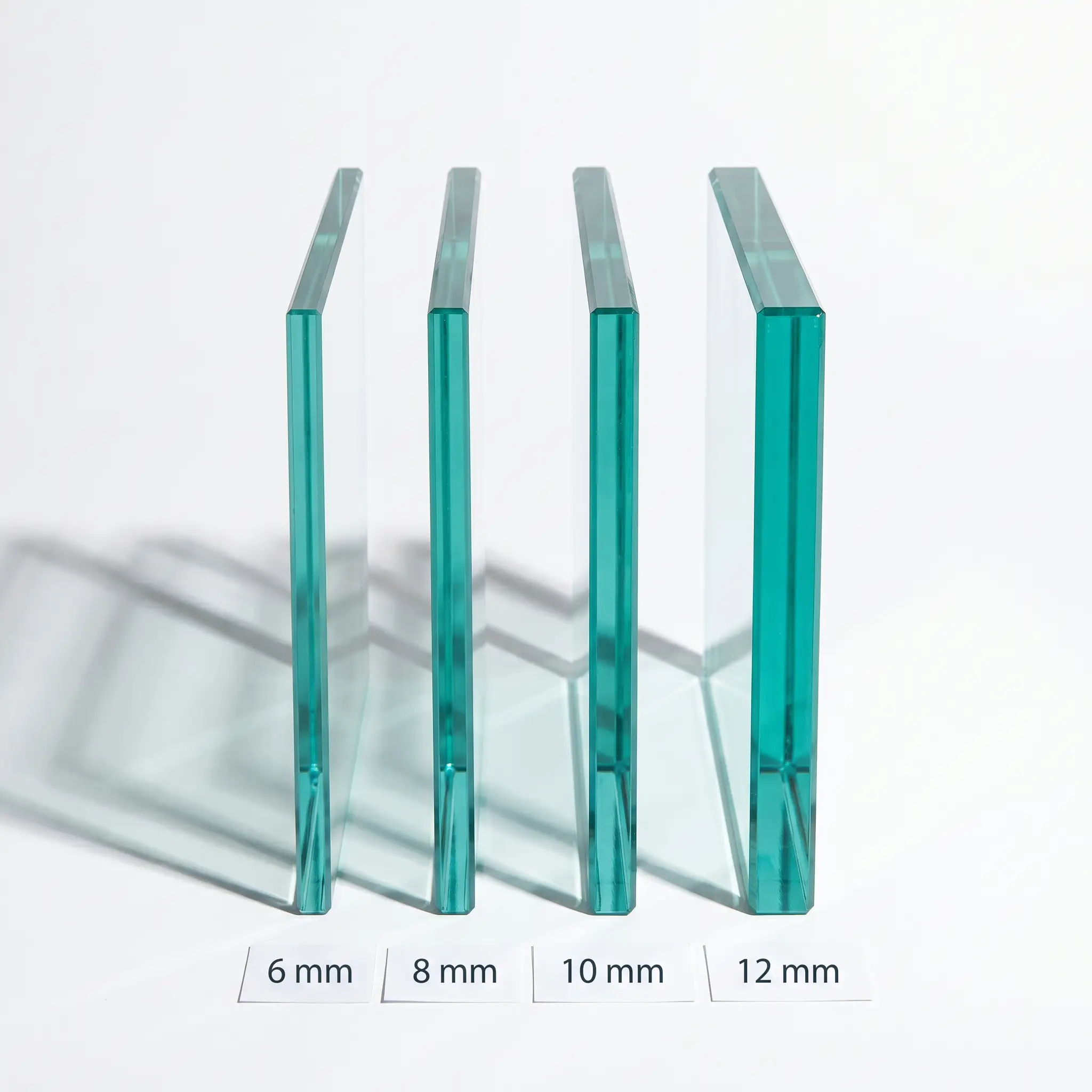
On frameless screens the glass thickness is decisive: 8 mm is today’s standard, 6 mm is common on older units, and 10 mm appears on large walk-ins and panels. Measure with a caliper and pick a profile with the right tolerance. Curved and folding screens use profiles shaped to match — check the shape as well as the size.
On a framed screen the seal sits inside an aluminium profile that does part of the sealing work. On a frameless screen there is no frame: the push-on strip is the only thing between the glass edge and the floor. If it hardens or slips, the water path is wide open — which is why frameless screens are the first place worn seals show up as puddles.
Frameless also means the seal is on show. A clear strip keeps the minimal look the screen was bought for, while a yellowed or clouded one is the first thing the eye catches. On frameless glass a seal swap is as much a visual refresh as a functional one.
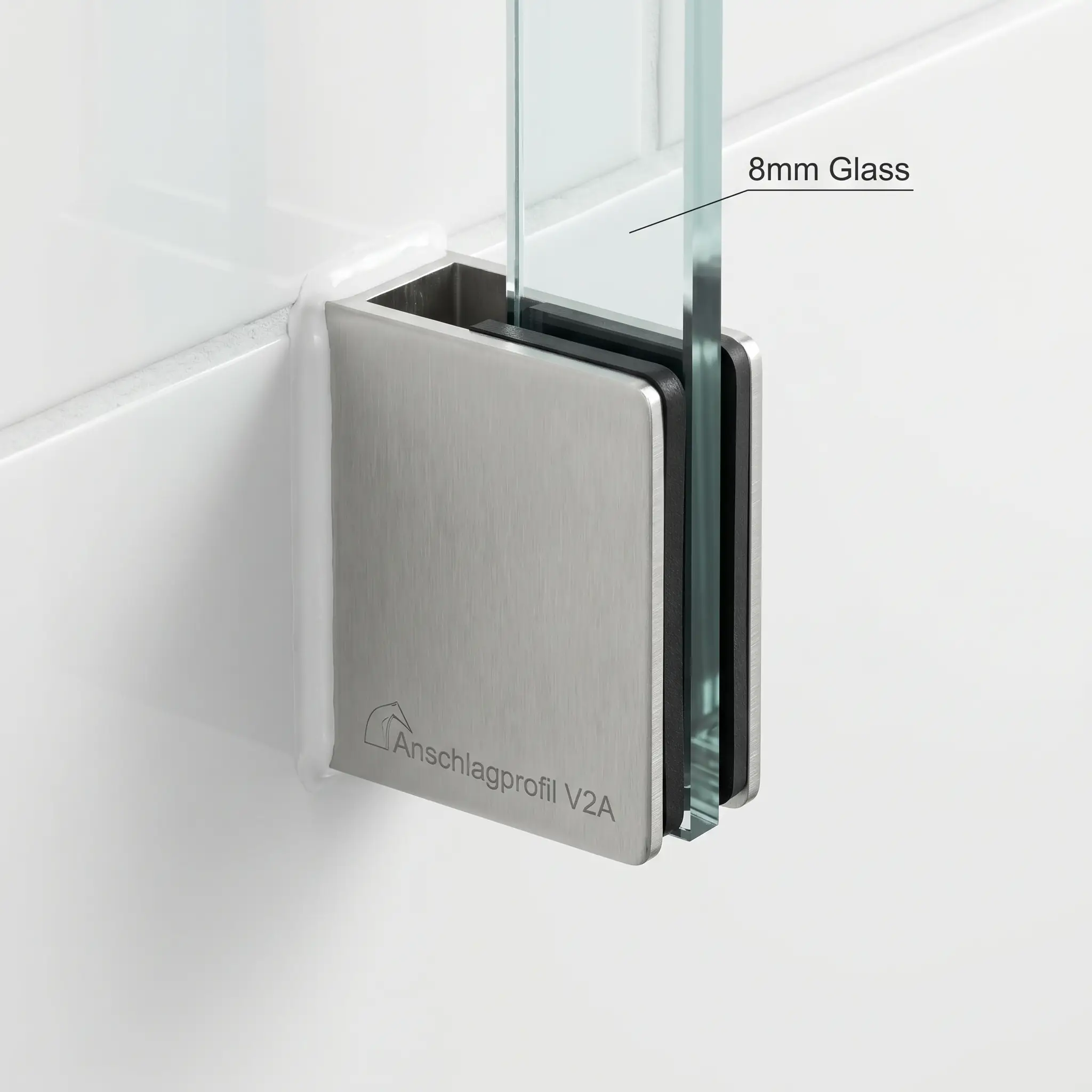
Shower screens are toughened safety glass. Once toughened, the pane cannot be cut, drilled or trimmed — any attempt shatters it into granules. So a screen is never made to fit a seal; the seal always has to fit the screen. That makes the glass thickness the one measurement everything else hangs on.
Measure it at the open edge of the screen — the exposed glass edge at the entry or the top corner — with a caliper. Take the reading in two or three spots to rule out a measuring error, then match the profile’s tolerance range to it (4, 6, 8 or 10 mm are the common thicknesses).
A shower screen that no longer looks clear has one of three problems, and they need different fixes. A limescale film is a mineral deposit on the surface: a limescale remover or mild acid-based cleaner takes it off and the glass is clear again. Glass corrosion is different — years of hard water and heat etch the surface itself, and no cleaner can polish etched glass back; that damage is permanent.
The third case is not the glass at all: yellowed or clouded seal strips along the edges make the whole screen look tired. That one has the easiest fix — pull the old strips off and push new ones on. Before you scrub anything, work out which of the three you are actually looking at.
Read more: Why seals yellow — materials explained
A walk-in screen has no door — so there is no closing edge to seal. Sealing happens at two places only: along the bottom edge, where a water deflector guides run-off back into the tray, and at the wall, where a wall profile or U-channel closes the glass-to-wall joint.
The open entry is a splash zone by design. A deflector on the bottom edge limits how much water escapes, but no seal can close an opening that is meant to stay open — if the floor outside a walk-in gets wet, that is the concept, not a defect. Position and screen width control it, not a thicker seal.
Read more: Deflectors and bottom seals in detail
Coming soon
Explainer clip coming soon
An animated step-by-step guide to “Shower Screen Seal” — which profile fits and how to replace it — is on the way.
The 5 most common questions, answered.
First find the leak point (door, base or wall), then renew the matching profile: a magnetic or lip seal at the door, a bottom seal at the base, a U-channel or wall profile at the wall. Push-on strips are simply swapped: pull the old one off, clean the channel, cut the new strip to length and push it on. The configurator helps you pick by glass thickness and shape.
A magnetic seal for a pivot door, a lip seal for a sliding door — each matched to the glass thickness (4/6/8/10 mm). Combined with a bottom seal at the base, the door is watertight all round. Our configurator suggests the right profile in under 90 seconds.
Usually the base seal is missing or its wiper lip has worn. Frameless screens often have only a slim profile with a lip to the tray at the base — once it goes hard or slips off, water runs onto the floor. A new bottom seal in the correct glass thickness fixes it reliably.
Not usually — three different problems look alike. A limescale film comes off with a limescale remover and the glass is clear again. Glass corrosion — etching from years of hard water — is permanent and no cleaner reverses it. Yellowed seal strips along the edges are the third case: the glass is fine and new push-on strips fix the look in minutes.
At the two edges that can be sealed: a water deflector along the bottom edge returns run-off to the tray, and a wall profile or U-channel closes the glass-to-wall joint. The open entry stays open by design — it is a splash zone, and no seal closes it. Both profiles are matched to the glass thickness, typically 8 or 10 mm on walk-ins.
Also searched as
Answer three quick questions and get the exact profile for your shower — with live Amazon prices.