 STEIGNER
STEIGNER Magnetduschdichtung SET UKM02, 201 cm, 6/7/8 mm Glas, 180° Drehtür
Check current price & rating on Amazon
View on AmazonAffiliate link — we earn from qualifying purchases.
If water escapes down the side or over the top of your shower door, the seal is almost always worn, hard or the wrong size. Which shower door seal you need comes down to two things: the door type (pivot, sliding or bi-fold) and the glass thickness.
For pivot, sliding and bi-fold glass shower doors from 4 to 10 mm glass.
The configurator takes you to the right shower seal in under 90 seconds — by shower type, glass thickness and door type.
STEIGNERAffiliate link — we earn from qualifying purchases.
 DOPPOSO
Affiliate link — we earn from qualifying purchases.
 QOROCO
Affiliate link — we earn from qualifying purchases.
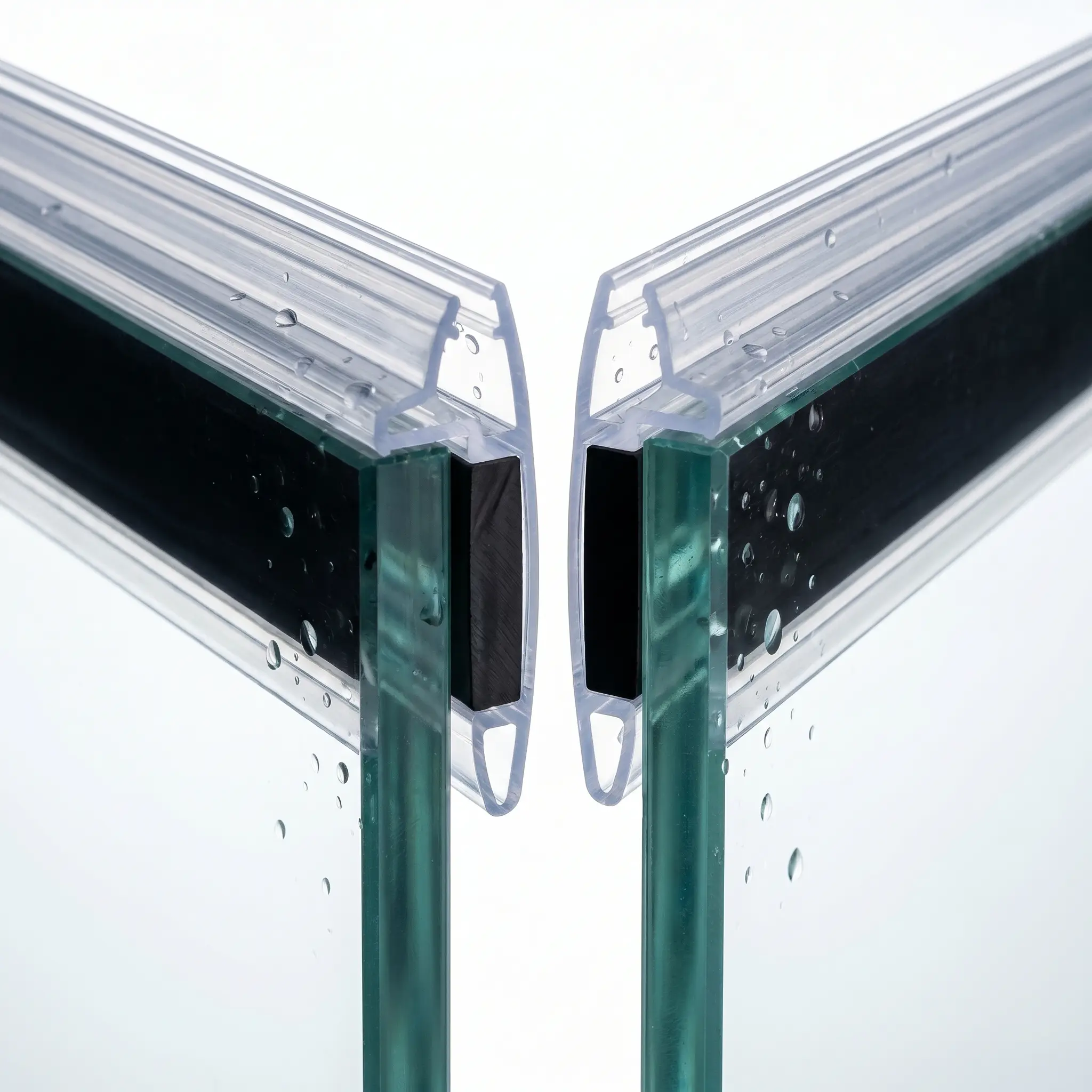
Pivot and hinged doors almost always close onto a magnetic seal: two magnetic profiles on the door and fixed panel pull together and seal the vertical gap. If the old magnetic strip sits loose or the door no longer clicks shut, the magnet has usually failed or the profile has warped.
Sliding and bi-fold doors have no magnetic contact, so they use a lip (wiper) seal: a soft TPE or silicone lip that presses against the glass or wall. At the base, a separate bottom seal stops water running out under the door.
The number-one buying mistake is the wrong glass thickness. Measure the edge with a caliper in a few places (4, 6, 8 or 10 mm are common in the UK and US) and pick a profile with the matching tolerance. An 8 mm seal on 6 mm glass sits loose and leaks; the wrong way round it will not push on.
The second value is the gap size: the distance the lip has to bridge between door and fixed panel. A lip that is too short will not close a large gap even if the glass thickness is right. Measure it on the old seal or across the gap with the door shut.
Magnetic shower door seals close at a fixed angle, and it has to match your enclosure shape. A corner-entry enclosure, where two doors meet at a right angle, closes at 90°. A pentagon enclosure with its cut corner closes at 135°. A straight front or a recess (alcove) door, where door and fixed panel sit in line, closes at 180°.
You can read the angle off the old seal: look at the magnet faces end-on and note how the two profiles meet when the door is shut. Fit the wrong angle and the magnets meet askew — the door will not pull flush, leaves a vertical gap and drips exactly where the seal should work hardest. If you are unsure, the configurator asks for your enclosure shape and only shows profiles with the matching angle.
Read more: Find your seal in the configurator
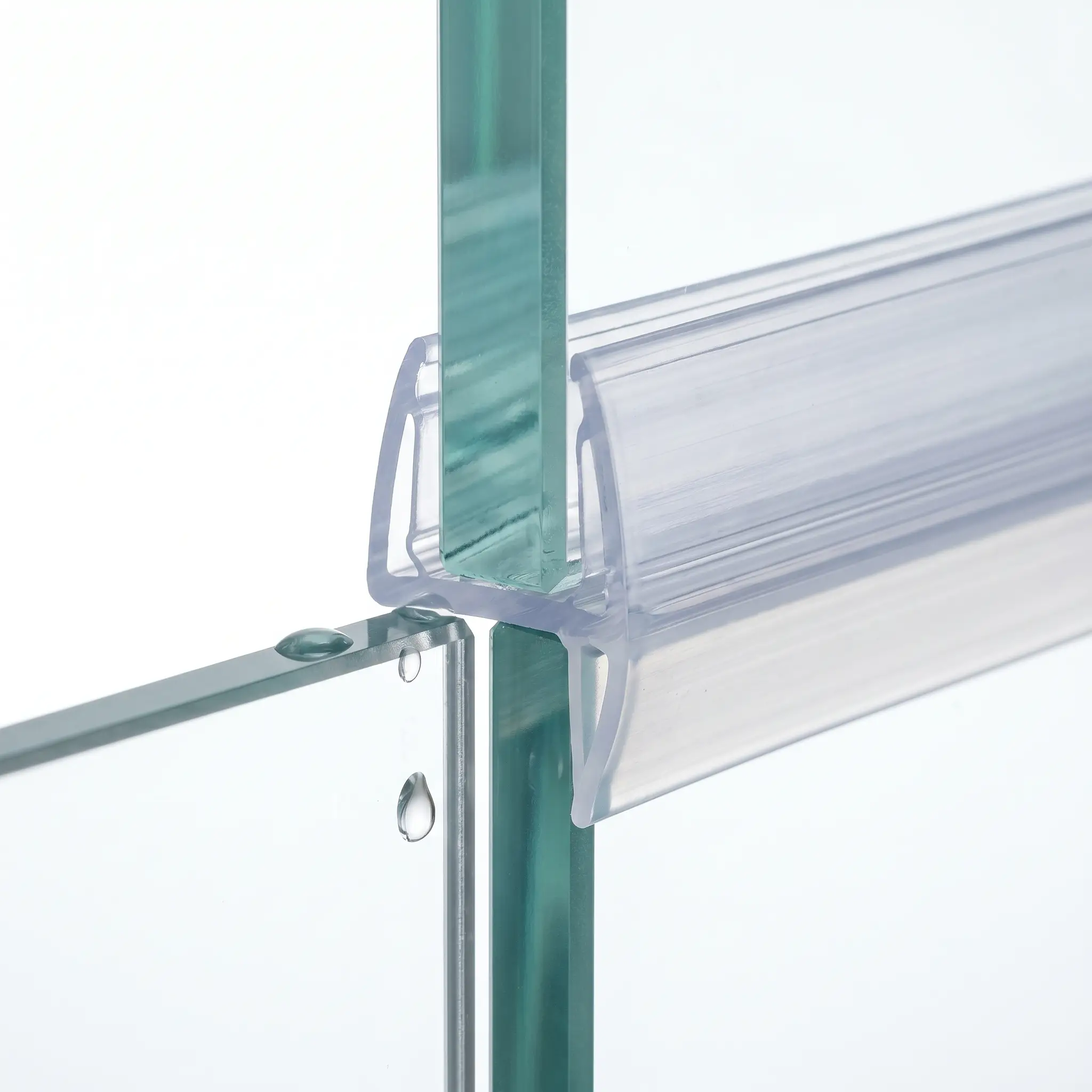
A glass shower door carries up to three different seals. The closing edge takes the magnetic or strike seal that pulls the door shut. The hinge side often has a slim lip profile that covers the pivot gap. And along the bottom edge sits the bottom seal, which has the hardest job: bridging the gap between glass and threshold on every shower.
That bottom profile is usually a hollow-chamber design — in the UK widely known as a “bubble seal”, because the soft air chamber compresses against the threshold as the door closes. It is a separate part from the vertical seals and wears at its own pace, so you can replace it on its own.
Read more: Bottom seals and sweeps in detail
Most returned shower door seals fail on one of five points. First: the wrong magnet angle — a 180° profile on a 90° corner entry will never close flush. Second: guessed glass thickness instead of a measured one — “it looks like 8 mm” is how loose seals happen. Third: ordering the exact length with no cutting reserve, so one slip of the knife leaves the strip short.
Fourth: fitting the seal with the lip facing the wrong way, so it channels water out of the shower instead of back in. Fifth: buying a magnetic profile for a sliding door — sliding doors never close onto a magnet, they need a lip seal. Each mistake is avoidable by measuring the old seal and checking the door type before ordering.
Seals age much faster than the rest of the door. The glass is toughened and effectively wear-free, and hinges last decades — but the soft plastic of a seal loses plasticiser, hardens and cracks long before anything else gives up. A leaking door is therefore almost never a broken door.
The practical rule: if the glass is undamaged and the hinges still hold the door true, a new profile restores the door completely. Replacing the whole door only makes sense when the glass itself is chipped or the hinges are worn beyond adjustment.
Coming soon
Explainer clip coming soon
An animated step-by-step guide to “Shower Door Seal” — which profile fits and how to replace it — is on the way.
The 6 most common questions, answered.
It depends on the door type and glass thickness. Pivot and hinged doors use a magnetic seal; sliding and bi-fold doors use a lip (wiper) seal, plus a bottom seal at the base. Then match the glass thickness (4/6/8/10 mm) and the gap the seal has to bridge. Measure the old seal or use our configurator to get a matched profile.
Modern shower door seals are push-on strips, so no tools or silicone are needed. Pull off the old seal, wipe the channel clean and dry, cut the new strip to length with a craft knife, then push it on and press it home. For a stiff old profile, warm it gently with a hairdryer first.
They do different jobs. A magnetic shower door seal pulls a pivot door shut and seals the vertical gap; a plain rubber or lip seal suits sliding and bi-fold doors that have no magnet. Both wear out — when the lip goes hard, cracks or the magnet weakens, replace like for like in the correct glass thickness.
Universal seals cover many common sizes but not every brand. Check the glass-thickness tolerance and the door type. Branded enclosures (Kermi, Hüppe, Schulte and similar) sometimes need the original profile or a verified universal match. Our configurator filters to compatible profiles only.
It follows your enclosure shape: 90° for a corner entry where two doors meet at a right angle, 135° for a pentagon enclosure, 180° for a straight front or recess door in line with the fixed panel. Read the angle off the old seal or off how the magnet faces meet when the door is shut — with the wrong angle the door will not close flush.
“Bubble seal” is the common UK name for the hollow-chamber profile on the bottom edge of a shower door. The soft air chamber compresses against the threshold when the door closes and bridges the gap underneath. In the US the nearest term is a shower door sweep. It is a separate part from the vertical door seals and can be replaced on its own.
Also searched as
Answer three quick questions and get the exact profile for your shower — with live Amazon prices.