 EMKE
EMKEEMKE Wasserabweiser Schwallschutz 100 cm, 4–6 mm Glas
Check current price & rating on Amazon
View on AmazonAffiliate link — we earn from qualifying purchases.
“Bottom seal”, “sweep” and “tray seal” all describe the strips that keep water from running out at the base of a glass shower door. Which one you need depends on whether water runs out under the door or over the tray edge.
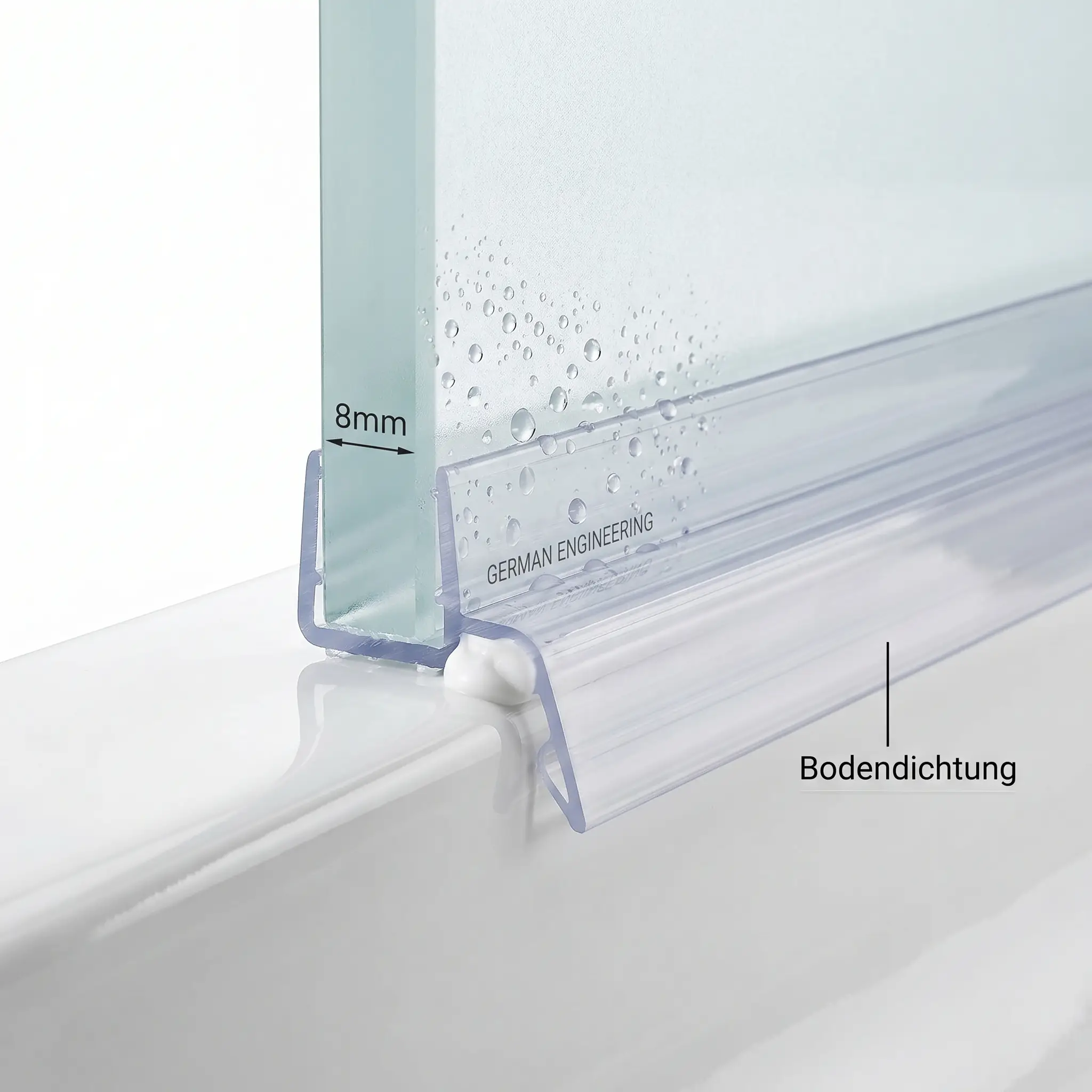
For the base of glass shower doors, walk-ins and shower trays from 4 to 10 mm glass.
The configurator takes you to the right shower seal in under 90 seconds — by shower type, glass thickness and door type.
EMKEAffiliate link — we earn from qualifying purchases.
 DOPPOSO
Affiliate link — we earn from qualifying purchases.
 Gedotec
Affiliate link — we earn from qualifying purchases.
Bottom seal / sweep: the strip with a wiper lip on the bottom edge of a swinging or sliding glass door (the US term is “sweep”, the UK term “bottom seal”). Drip rail / water deflector: a sloped strip that channels run-off back into the tray on a walk-in. Tray seal: the profile between the fixed glass and the shower tray. Watch where the water escapes — under the door (sweep) or over the tray edge (deflector) — to choose.
Like every push-on profile, the glass thickness decides the fit: measure the edge and pick a bottom seal with the right tolerance (4/6/8/10 mm), then measure the length plus about 10% spare to trim. Base seals and sweeps wear faster than door seals because of the constant water and pressure — change them first when water appears at the floor.
The base of a shower is a small drainage system. The tray is laid with a fall towards the waste, so any water that lands on it runs off on its own. The seals’ job is only to keep the water on the tray long enough to drain: the drip lip on the bottom seal wipes the inside of the glass and directs run-off back towards the waste instead of letting it creep under the door.
That job is also why the bottom seal is always the first to go. Every other seal on the enclosure sees spray; the bottom seal sits in the water path itself, cycles wet and dry with every shower, collects limescale along its lip and takes mechanical contact with the tray each time the door moves. Fastest wear at the base is normal, not a product fault.
Three different strips work at the base, and the leak decides which one you need. Water escaping under the door means the seal on the door’s bottom edge — in the UK usually called a shower screen seal or bubble seal, in the US a shower door sweep. Water running over the tray edge on a walk-in means a deflector (drip rail) on the glass or tray. Water spreading across the floor at an open entry means a self-adhesive threshold strip on the floor itself.
The names get mixed up constantly, so ignore them and go by the mounting point: door edge, tray edge or floor. A sweep will not fix a walk-in overflow, and a threshold strip will not stop water passing under a door.
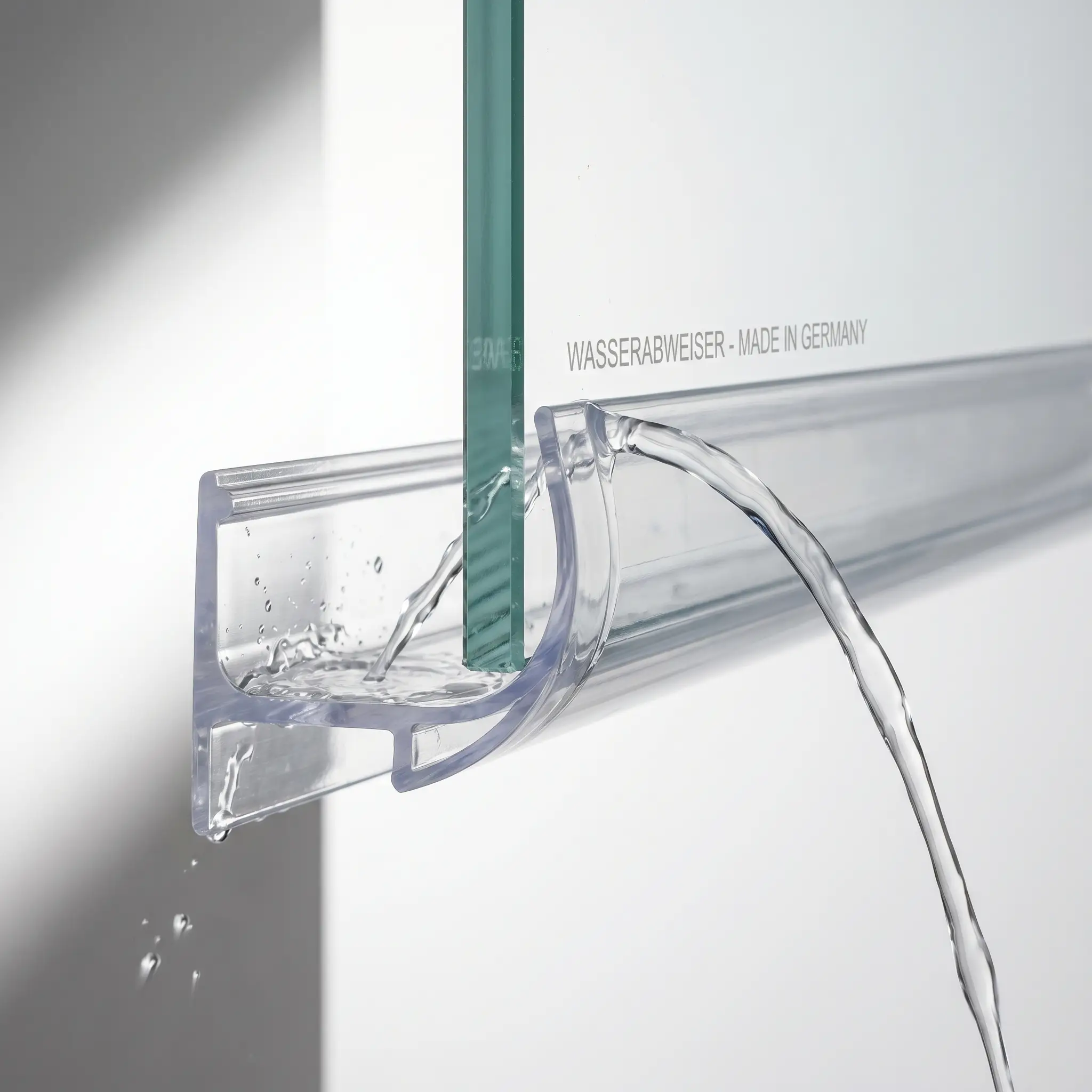
The one rule that decides success: the angled drip lip points into the shower, towards the waste. Fitted that way, it wipes water off the glass and channels it back onto the tray. Fitted backwards, it does the opposite — it collects run-off and guides it out over the tray edge, which looks exactly like a worn seal.
Where two bottom profiles meet at a corner, cut both ends at a 45° mitre so the lips join without a gap. After fitting, run a water test: aim the shower head along the base for a minute and watch the outside edge. Dry floor means the lip direction, the mitres and the fit are right.
Read more: Find the matching bottom seal in the configurator
Three signs say the strip is at the end of its life. First, look at the lip: if it stands off the glass, is kinked or shows cracks, it no longer follows the door and cannot wipe cleanly. Second, look at the floor: a puddle in front of the shower after every use is the classic symptom of a failed sweep. Third, look for a limescale line along the lip — it marks where water has been sitting instead of draining.
Any one of these means replacement, not cleaning. A deformed lip has lost its plasticisers and will not straighten again — and since a bottom seal swaps in minutes without tools, replacing it early is cheaper than drying the bathroom floor every day.
Coming soon
Explainer clip coming soon
An animated step-by-step guide to “Shower Door Bottom Seal” — which profile fits and how to replace it — is on the way.
The 5 most common questions, answered.
It is the strip with a soft wiper lip along the bottom edge of a glass shower door that stops water running out onto the floor. “Sweep” is the common US term, “bottom seal” the UK term — same part. On walk-ins a separate drip rail or water deflector returns run-off to the tray.
Like any push-on profile: slide or pull the old seal off the glass, wipe the edge clean and dry, cut the new bottom seal to length with a craft knife, then push it on and press it home. No drilling or silicone. Match the glass thickness and add about 10% length to trim.
Along the free bottom edge of a walk-in, a water deflector guides water back into the tray; at the base of the fixed glass a tray seal or bottom seal closes the gap to the tray. Both come sized to the glass thickness — the configurator shows the compatible profiles.
Into the shower — the angled lip points towards the waste so it wipes water off the glass and back onto the tray. Fitted the wrong way round it channels run-off out over the tray edge, which looks exactly like a worn seal. After fitting, aim the shower head along the base for a minute: a dry floor outside confirms the direction is right.
Because it sits in the water path. Vertical door seals only see spray; the bottom seal cycles wet and dry with every shower, collects limescale along its lip and touches the tray each time the door moves. That combination hardens and cracks the lip sooner. Fast wear at the base is normal — replace it first when water appears on the floor.
Also searched as
Answer three quick questions and get the exact profile for your shower — with live Amazon prices.