 STEIGNER
STEIGNER Magnetduschdichtung SET UKM02, 201 cm, 6/7/8 mm Glas, 180° Drehtür
Check current price & rating on Amazon
View on AmazonAffiliate link — we earn from qualifying purchases.
Shower seal strips — also called seal profiles or door seal strips — are the push-on strips that make a glass shower watertight. They come in a few core shapes, each for a different job. This overview shows which strip does what and how to pick the right one.
Core strip types: magnetic, lip, U-channel, bottom seal and wall/corner profile.
The configurator takes you to the right shower seal in under 90 seconds — by shower type, glass thickness and door type.
STEIGNERAffiliate link — we earn from qualifying purchases.
 DOPPOSO
Affiliate link — we earn from qualifying purchases.
 QOROCO
Affiliate link — we earn from qualifying purchases.
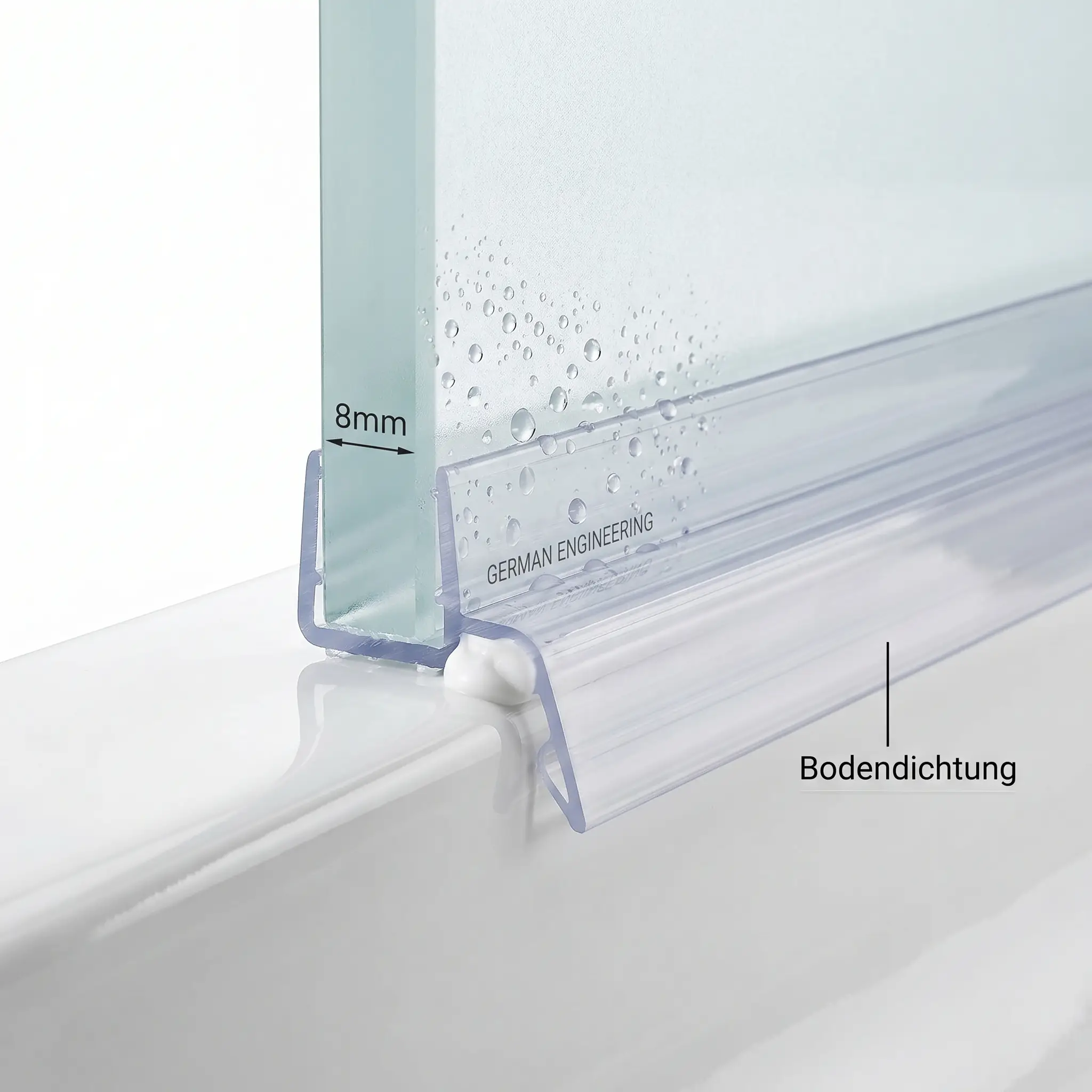
Magnetic strip: two magnetic profiles pull a pivot door shut. Lip (wiper) strip: a soft lip for sliding and bi-fold doors. U-channel: wraps the glass edge and seals to wall, floor or ceiling. Bottom seal: sits at the base of the glass with a wiper lip. Corner and wall profiles: join glass to glass or glass to wall.
Three details are enough: the spot (door, base, wall or corner), the door type (pivot, sliding, bi-fold) and the glass thickness (4/6/8/10 mm). Every strip has a tolerance range — e.g. 6 to 8 mm. Too loose and it drips; an exact fit seals tight. Universal seal strips cover many sizes; branded enclosures may need the original profile.
The end of a seal strip tells you what it is. A dark strip embedded in the profile is a magnet core — a magnetic closing strip. Soft protruding fins are wiper lips — a lip seal for sliding doors or the base. An enclosed air pocket is a hollow chamber, the “bubble” design that compresses against a threshold. A U-shape that wraps the glass edge is a channel profile.
The reliable way to match an unknown strip: cut a short piece off the old seal (or use the removed one) and photograph its cross-section next to a ruler. Shape plus dimensions identifies the profile faster than any brand search — most strips are generic shapes made by many manufacturers.
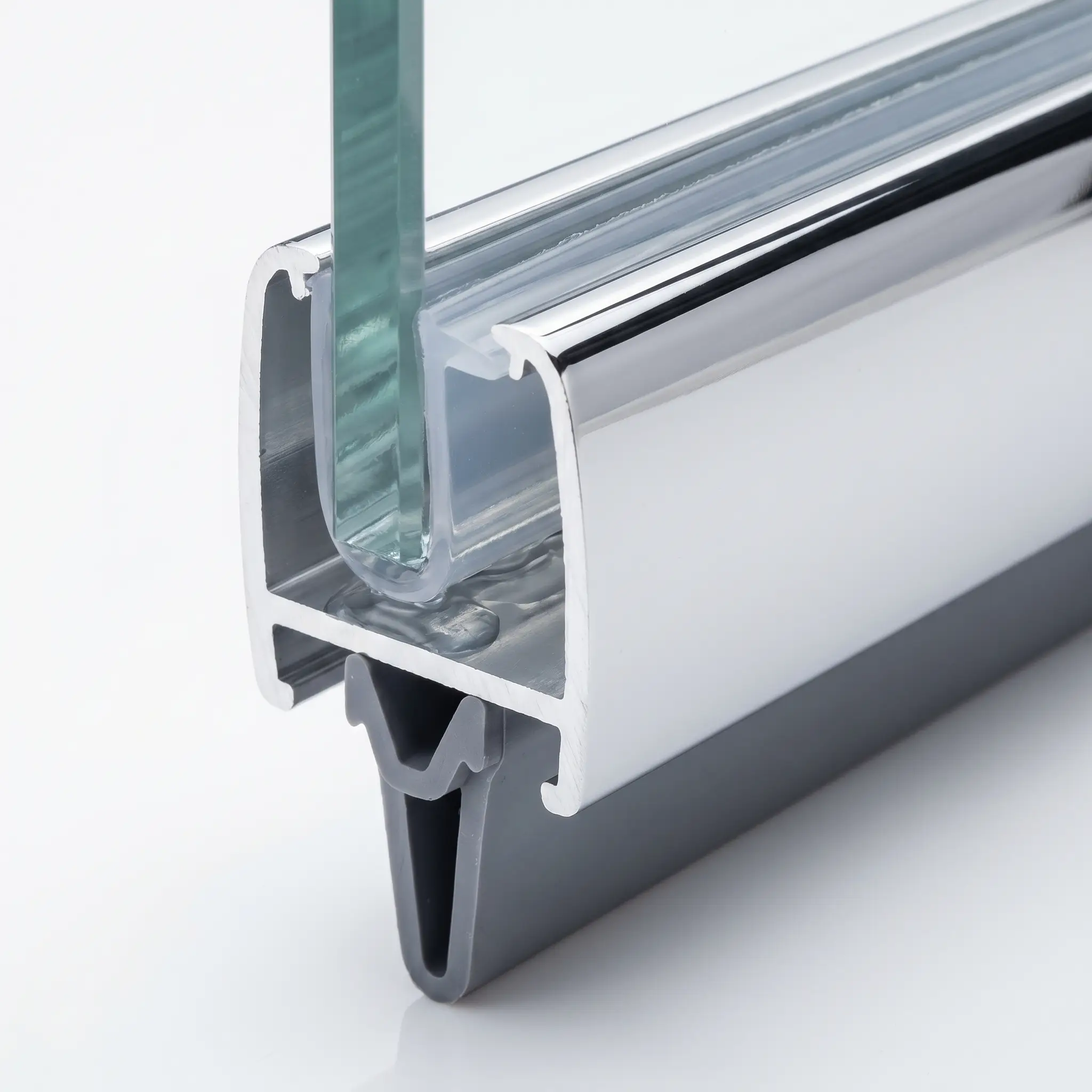
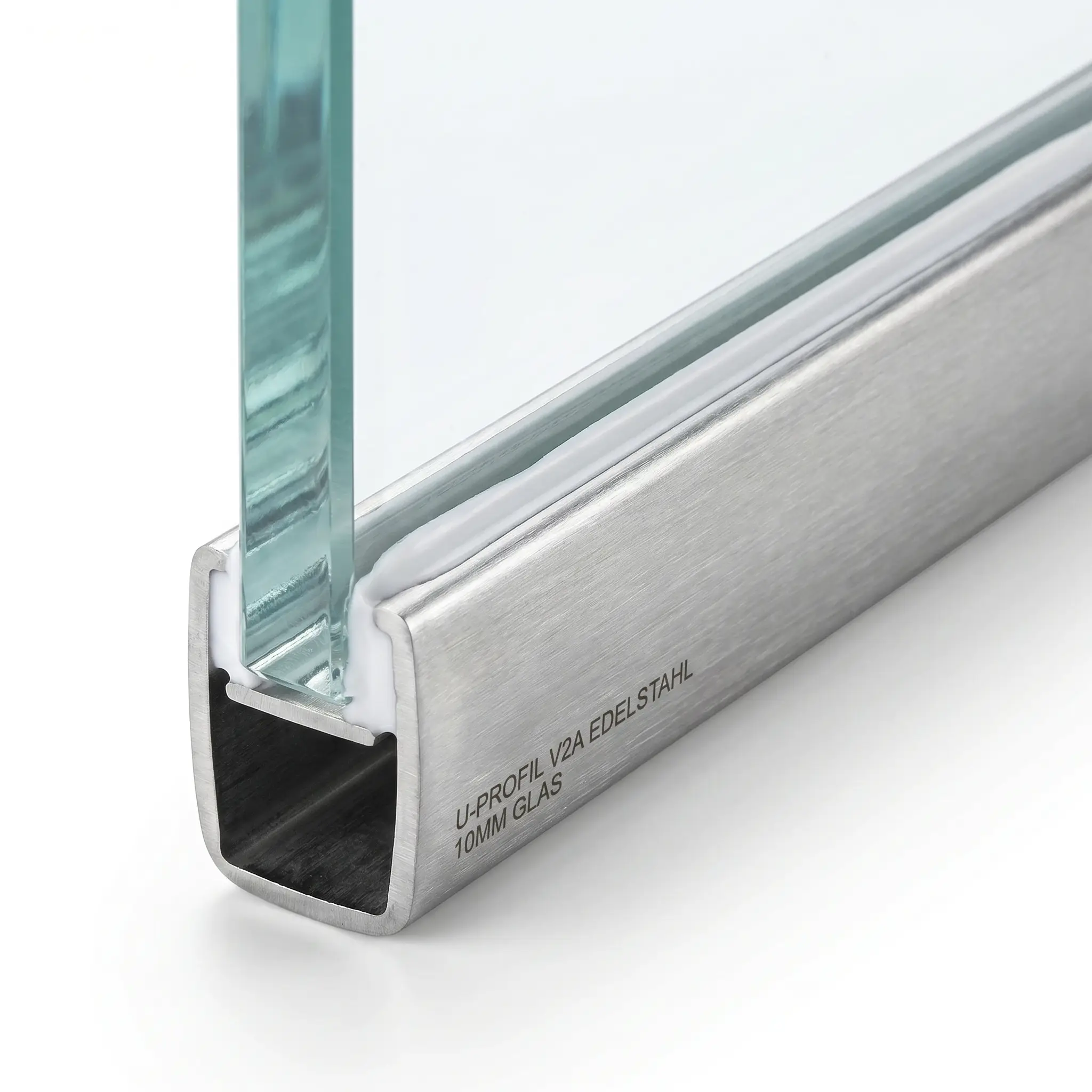
Push-fit strips slide straight over the glass edge and grip it by tension — no tools, no adhesive, the standard for frameless glass. Channel (clamp) profiles seat inside the aluminium frame of a framed enclosure; the old strip pulls out of the channel and the new one presses in. Self-adhesive threshold strips are the third type: they stick to the tray or floor at the entry and act as a low water barrier.
The fixing type is not a free choice — it is set by where the strip goes. Glass edge means push-fit, frame channel means channel profile, floor means self-adhesive. Mixing them up (an adhesive strip on a glass edge, say) is a short-lived repair.
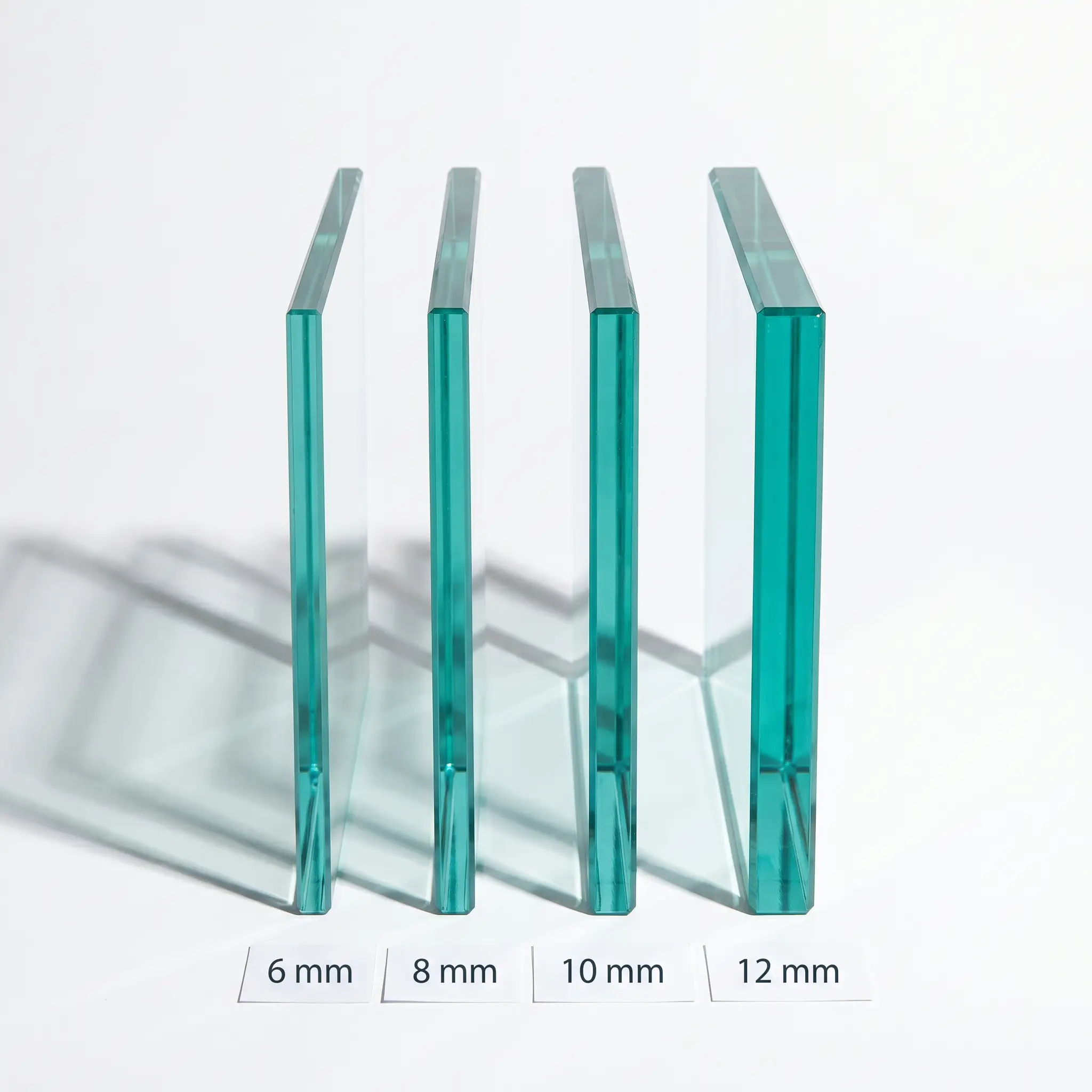
Strips are sold for glass thicknesses of 4, 6, 8 or 10 mm — or for a range such as “6-8mm”, meaning the channel grips any glass within that span. The range is a genuine fit, not a compromise, as long as your glass actually falls inside it. Outside the range the strip either will not push on or sits loose and leaks.
Measure with a caliper at the exposed glass edge, not by eye — the difference between 6 and 8 mm is hard to judge and is the single most common ordering mistake. Two or three readings along the edge rule out a slip.
Cut with a sharp craft knife against a straight edge, or with mitre shears for soft profiles. Where two strips meet at a corner, cut both at a 45° mitre so the lips meet without a gap — a square butt joint always leaves a channel for water. Order around 10% more length than measured so a miscut costs a few centimetres, not a reorder.
Fit on clean, dry glass: wipe the edge down, push the strip on from one end, and press it home along its length. If a strip fights you, warm it gently with a hairdryer — soft and slightly warm, it slides on far more easily.
Coming soon
Explainer clip coming soon
An animated step-by-step guide to “Shower Seal Strip” — which profile fits and how to replace it — is on the way.
The 5 most common questions, answered.
They mean the same thing: a push-on strip that seals a glass shower. “Seal strip”, “seal profile” and “door seal strip” are used interchangeably. What matters is not the name but the shape (magnetic, lip, U-channel, bottom, corner) and the matching glass thickness.
It follows the sealing point and door type: a magnetic strip for pivot doors, a lip strip for sliding or bi-fold doors, a U-channel for the glass edge, a bottom seal at the base and a corner profile for glass-to-glass. Add the glass thickness and the configurator returns the right strip.
Mostly not traditional rubber but PVC, TPE or silicone, and only some EPDM. The common search “rubber seal strip” means the same profiles. Silicone and EPDM last longer and resist UV better; PVC is cheaper and holds its shape.
It is the tolerance range: the strip fits any glass between 6 and 8 mm thick. Within the range it is a genuine fit; outside it the strip either will not push on or sits loose. Measure your glass with a caliper at the exposed edge before ordering — judging 6 versus 8 mm by eye is the most common mistake.
By its cross-section. Look at the end of the old strip: a magnet core means a magnetic strip, soft fins mean a lip seal, an air chamber means a hollow (bubble) profile, a U-shape means a channel profile. Photograph the cross-section next to a ruler and add the glass thickness — that identifies the profile without any brand name.
Also searched as
Answer three quick questions and get the exact profile for your shower — with live Amazon prices.