 STEIGNER
STEIGNER Magnetduschdichtung SET UKM02, 201 cm, 6/7/8 mm Glas, 180° Drehtür
Check current price & rating on Amazon
View on AmazonAffiliate link — we earn from qualifying purchases.
“Shower seal” is the everyday name for the strips that keep a glass shower watertight. Most are not actually rubber — they are flexible PVC, TPE or silicone. Which shower seal you need depends on where the water is getting out.
For the door, screen, base, wall and corners of glass showers and enclosures.
The configurator takes you to the right shower seal in under 90 seconds — by shower type, glass thickness and door type.
STEIGNERAffiliate link — we earn from qualifying purchases.
 EMKE
EMKEAffiliate link — we earn from qualifying purchases.
 DOPPOSO
Affiliate link — we earn from qualifying purchases.
Few shower seals are traditional rubber. Four materials are common: PVC (cheap, firm, used on many magnetic and lip profiles), TPE (soft and flexible, good for wiper lips), silicone (heat- and UV-resistant, longer-lasting) and EPDM (true rubber, very weather-resistant). For sealing performance the shape and the right glass thickness matter more than the material.
At the door: a magnetic profile (pivot door) or a lip seal (sliding or bi-fold door). At the base: a bottom seal with a wiper lip so nothing runs out under the glass. At the wall or glass edge: a U-channel or wall profile. On a walk-in, a water deflector guides run-off back into the tray.
Whatever the spot, the glass-thickness tolerance is what makes it work: a shower seal that is too big sits loose and drips; one that is too small will not push on.
Each material has a natural home. PVC is form-stable and holds a moulded shape, which is why magnetic profiles and hollow-chamber seals are usually PVC — the body keeps its geometry while only the contact faces flex. TPE is the soft one: wiper lips that have to glide along glass or tile with every door movement are typically TPE.
Silicone stays clear and flexible longer than the others, which makes it the choice where the seal is visible on frameless glass. EPDM — the only true rubber of the four — copes best with permanently damp spots such as the joint between fixed glass and tray. None of them is “best” across the board: the right material follows the job the seal has to do.
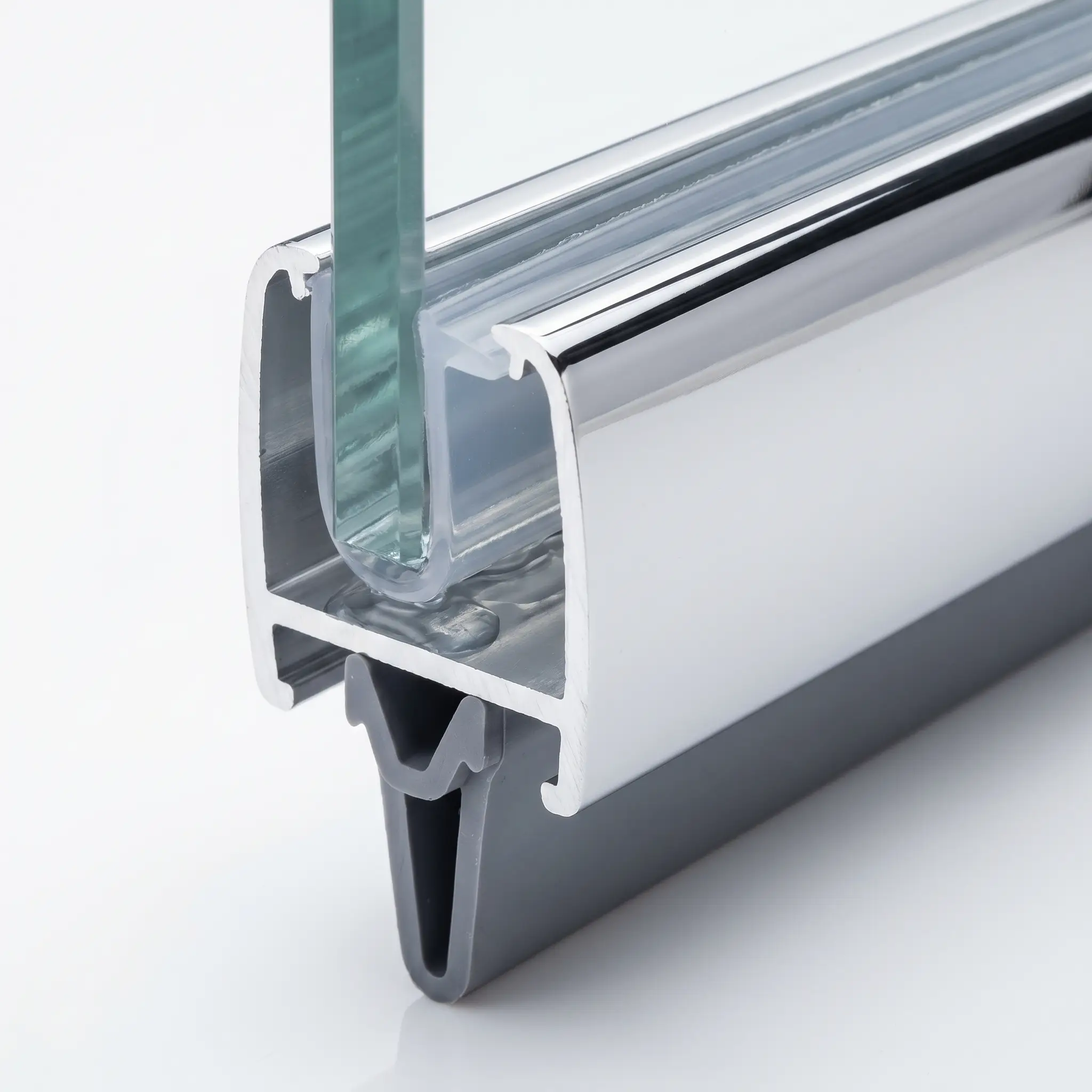
Clear seals disappear against frameless glass; white seals suit framed enclosures with white or matt profiles. Functionally they are equal — the choice is visual. The one thing to know before choosing clear: clear PVC yellows over the years as UV light and cleaning agents age the material. Silicone stays clear noticeably longer.
A yellowed seal is not a dirty seal. The discolouration sits in the material, not on it — no amount of scrubbing brings the clarity back, and aggressive cleaners only speed up the ageing. Once a clear seal has gone properly yellow, replacing it is the fix, not another cleaning product.
Shower seals come two ways: as cut-to-length strips (typically 1 m or 2 m) that you trim yourself, and as pre-cut seals for a specific door width. The strip is the flexible option — it fits any edge length and any maker, and a craft knife or mitre shears cut it cleanly. Order roughly 10% more than the measured edge so a miscut does not leave you short.
Pre-cut seals make sense when you know the exact part — a branded enclosure with a listed replacement, for instance. If you are matching an unknown door, the strip plus your own measurement is the safer route.
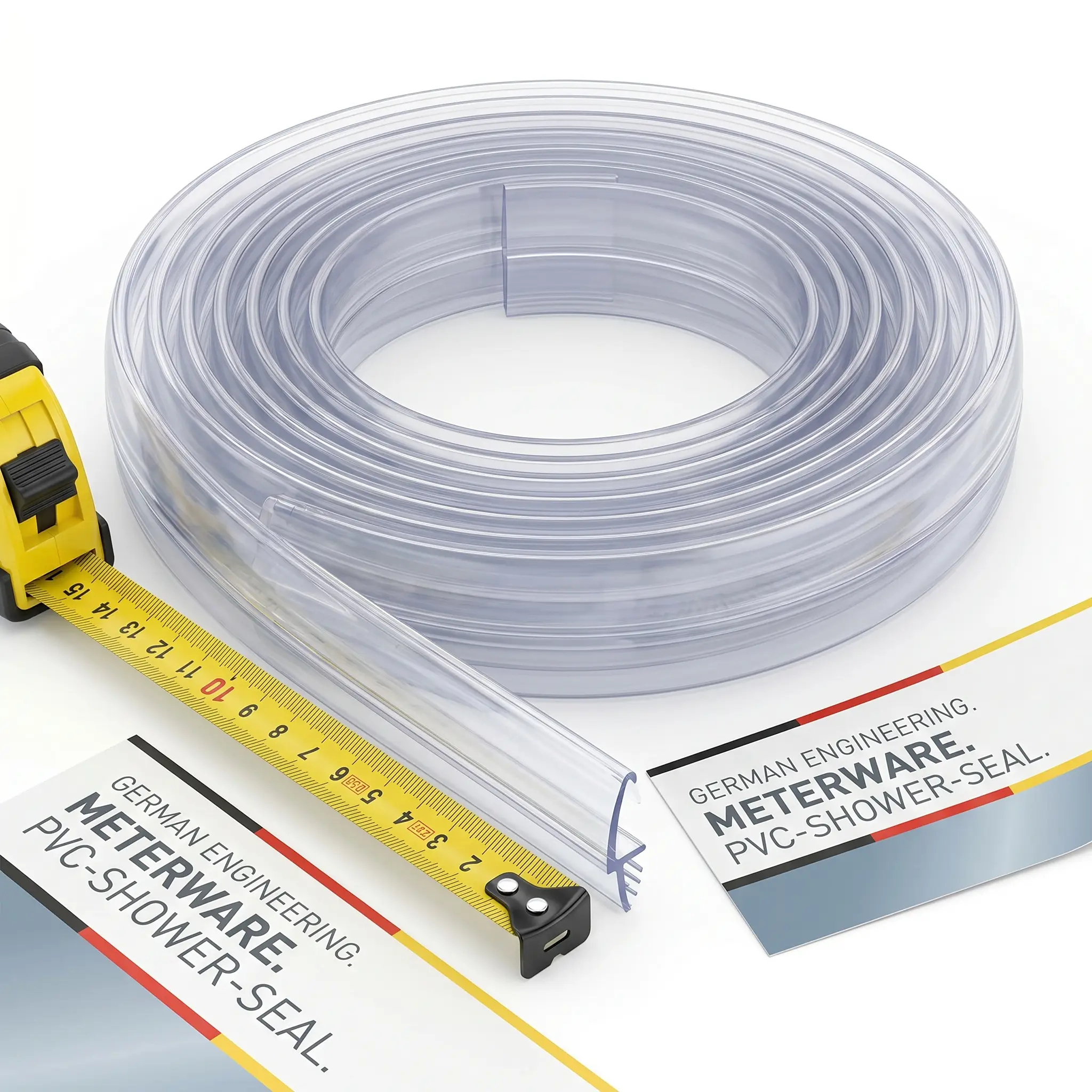
Read more: All seal strip types explained
Two habits stretch a seal’s life: rinse soap residue off after showering, and wipe the lips dry so limescale has nothing to build on. A mild cleaner now and then is fine; harsh chlorine-heavy products attack soft lips and shorten their life instead.
Care has a hard limit, though. Seals stay soft thanks to plasticisers in the material, and that loss is a one-way street: once a lip has gone hard, cracked or permanently discoloured, no cleaner, oil or home remedy makes it seal again. At that point the honest answer is a new seal — the material is done, not dirty.
Read more: Find the matching seal in the configurator
Coming soon
Explainer clip coming soon
An animated step-by-step guide to “Shower Seal” — which profile fits and how to replace it — is on the way.
The 6 most common questions, answered.
It follows the leak point and door type: a magnetic seal for pivot doors, a lip seal for sliding or bi-fold doors, a bottom seal at the base, and a U-channel or water deflector at the wall and edge. Add the glass thickness (4/6/8/10 mm). Our configurator takes you to the right profile in under 90 seconds.
Usually not. “Rubber seal” is a catch-all — most shower seals are made from PVC, TPE or silicone, and only some from true EPDM rubber. Silicone and EPDM are more UV- and heat-resistant and tend to last longer; PVC is cheaper and holds its shape well.
It depends on the material, water hardness and cleaning. Magnetic seals often last 5 to 8 years, lip seals 3 to 5, and base seals with daily water and pressure only 2 to 4. Once the lip goes hard, cracks or stains for good, it is time to replace it. Drying the seal after use extends its life.
Only for a short while. Cleaning and lightly oiling a slightly stiff lip can help, but brittle or split material will not seal reliably again. Once a seal is porous, hard or warped, replacing it is the dependable fix — it costs a few pounds and takes minutes.
Functionally they are equal — it is a visual choice. Clear seals blend into frameless glass; white suits framed enclosures with white profiles. Worth knowing: clear PVC yellows with age from UV and cleaning agents, while silicone stays clear longer. A yellowed seal cannot be scrubbed clear again — the discolouration is in the material.
Yes — cut-to-length strips are made for it. Measure the glass edge, order about 10% extra as a reserve, and cut with a sharp craft knife or mitre shears against a straight edge. Cut once, slightly long, and trim rather than cutting short. Pre-cut seals only make sense when the exact replacement part for your door is known.
Also searched as
Answer three quick questions and get the exact profile for your shower — with live Amazon prices.